Tracking Audience Retention Patterns in Successive Weeks for Wide Release Films Across Major Markets
Written by Iris Hughes · Aug 27, 2026
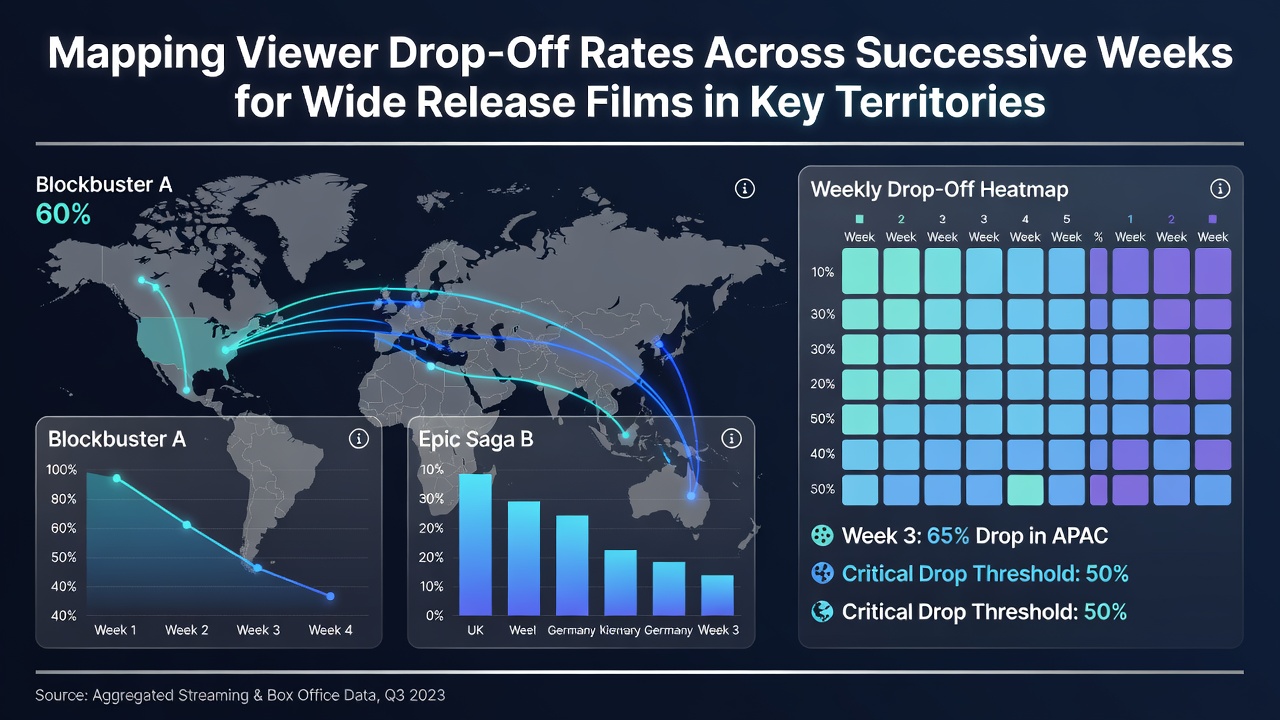
Tracking Audience Retention Patterns in Successive Weeks for Wide Release Films Across Major Markets
Box office analysts track viewer retention through weekly ticket sales data that reveals consistent patterns of audience decline after opening weekends for most wide release films. These measurements rely on figures compiled by organizations such as the Motion Picture Association and regional tracking services that aggregate theater admissions across teh United States, Europe, and Asia-Pacific regions. Data collected through the first half of 2026 shows that average second-weekend drops range between 45 and 55 percent for standard wide releases while films with stronger word-of-mouth marketing sometimes limit those declines to under 40 percent.
Regional Variations in Week-to-Week Retention
North American markets typically record steeper initial drops compared with European territories where longer theatrical windows allow steadier audience flow over successive weekends. Researchers at the European Audiovisual Observatory have compiled multi-year datasets that compare retention curves for comparable titles released simultaneously in multiple countries and those figures indicate that French and German audiences maintain higher repeat viewing rates through week three than US viewers do. In the Asia-Pacific region data from major chains in Japan and South Korea demonstrate that local productions often sustain attendance longer than imported blockbusters which experience sharper falloffs after the second week.
Data Collection Methods and Key Metrics
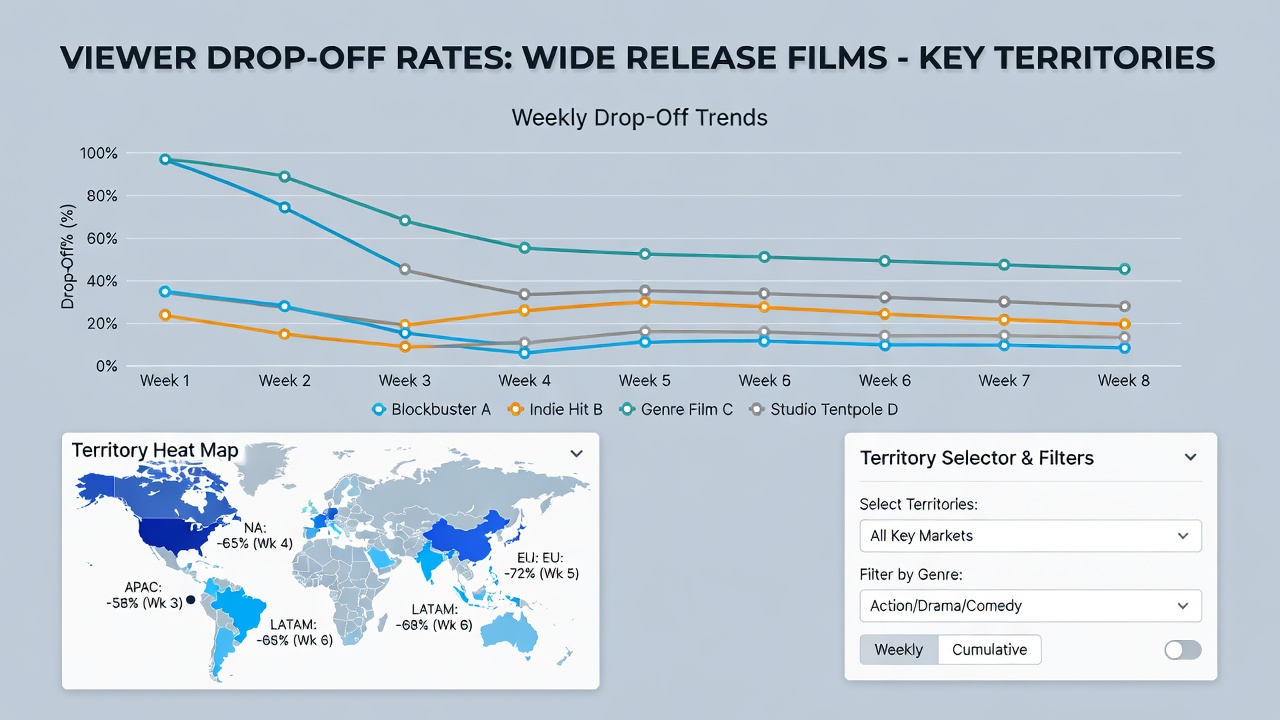
Industry analysts calculate drop-off rates by dividing second-weekend gross by opening weekend gross then repeat the process for each following week to generate retention curves. These calculations incorporate adjustments for screen count changes and holiday periods that can distort raw numbers. Observers note that August 2026 releases followed similar trajectories to prior years with many titles losing between 50 and 60 percent of their audience by the third weekend unless additional marketing pushes or awards buzz intervened.
Wide release strategies influence these patterns because films opening on more than 3000 screens face greater competition for the same pool of potential viewers. Case studies compiled by box office researchers show that titles with broad demographic appeal experience more gradual declines while niche-leaning blockbusters drop faster once core audiences have seen them. The reality is that external factors such as weather events, competing entertainment options, and school schedules also shape weekly attendance numbers in measurable ways.
Factors Affecting Successive Week Performance
Positive critical reception and strong social media engagement correlate with slower audience erosion according to aggregated industry reports. Films that maintain at least 70 percent of opening weekend earnings into week two tend to feature recognizable franchises or major star power that draws repeat visits. Analysts have documented how competition from new releases in the same genre accelerates drop-offs while staggered international rollouts can extend overall theatrical lifespan in select territories.
Those who study these trends point to the role of pricing promotions and loyalty programs in certain European markets where discounted mid-week tickets help stabilize attendance after the opening surge. Australian box office data released through government film agencies similarly highlights how regional marketing campaigns tailored to local preferences can moderate typical week-three declines. In contrast markets with shorter theatrical windows see accelerated falloffs once streaming rights activate.
Comparative Analysis Across Territories
Comparative datasets reveal that wide releases in the United States lose an average of 52 percent of their audience between weekends one and two while the United Kingdom and Germany average closer to 48 percent over the same period. Japanese theater chains report even lower drop rates for domestic animation titles which often retain over 60 percent of opening business into week two. These differences arise from varying release densities, cultural viewing habits, and the timing of school holidays that shift throughout the calendar year.
August 2026 examples followed established patterns with several major releases experiencing standard second-week declines yet benefiting from extended runs in territories where competition remained light. Trade publications compile these statistics weekly and provide breakdowns that separate original content from sequels and reboots to isolate the impact of brand recognition on retention curves.
Conclusion
Mapping viewer drop-off rates across successive weeks supplies distributors and exhibitors with actionable benchmarks for planning release calendars and marketing spend. The patterns observed through mid-2026 continue earlier trends while revealing how territory-specific factors modulate overall performance. Continued data collection from multiple regions allows for increasingly precise forecasting models that account for both universal industry dynamics and local market conditions.