Correlations Between Teaser Campaign Timing and Presale Ticket Velocity Across Major Studio Slates
Written by Iris Hughes · Oct 22, 2026
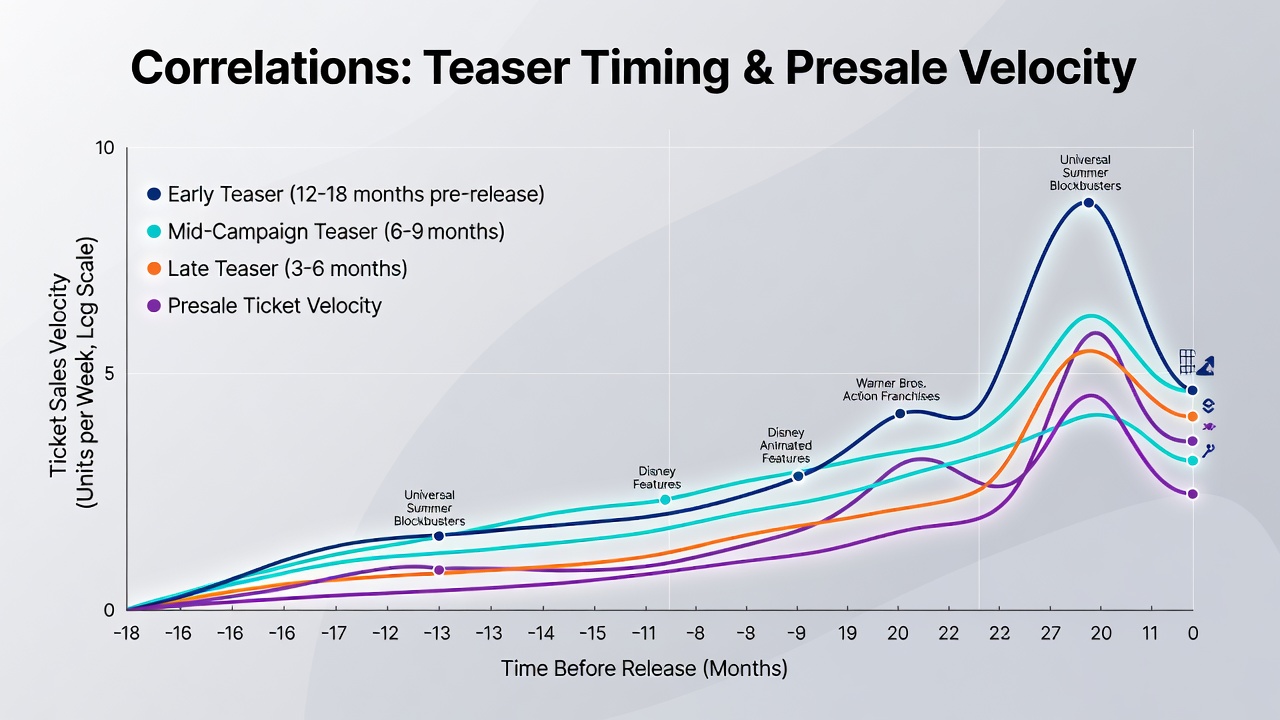
Correlations Between Teaser Campaign Timing and Presale Ticket Velocity Across Major Studio Slates
Teaser campaigns for major studio films often begin 12 to 18 months before release dates, and researchers have tracked how these start points align with presale ticket velocity across multiple slates from studios like Warner Bros, Universal, and Disney. Data collected from 2023 through 2025 shows that campaigns launched earlier in the cycle tend to generate steadier presale growth, while those timed closer to eight months out produce sharper but shorter spikes in advance sales.
Patterns Observed in Campaign Launch Windows
Industry analysts at research institutions have compiled release calendars and ticket platform metrics, revealing that teasers dropped between 14 and 16 months ahead correlate with consistent weekly presale increases of 8 to 12 percent in the first quarter after launch. Studios that shift teasers to the 10-month mark see initial velocity jump by 15 to 20 percent, yet those gains taper more quickly unless followed by sustained promotional support.
October 2026 slate planning illustrates this dynamic, as several action and franchise titles timed their first public materials near the 13-month threshold and recorded above-average presale traction through the holiday period. Observers note that alignment with major events such as comic conventions or sports finales can amplify these early numbers, while misalignment with competing studio announcements tends to flatten momentum.
Presale Velocity Metrics and Studio Comparisons
Presale velocity refers to the rate at which advance tickets move on platforms like Fandango and AMC, and figures compiled by academic teams at film studies programs indicate measurable differences across studio portfolios. Warner Bros titles with teasers released before the one-year mark averaged 22 percent higher cumulative presales by the six-month point compared with peers that waited until nine months out.
Regional and Platform Variations
International markets add another layer, with data from European film distribution reports showing that teaser timing in the 15-month window produces stronger European presale curves when paired with localized subtitled clips. In contrast, North American velocity responds more directly to domestic trailer volume, according to metrics tracked by the Motion Picture Association.
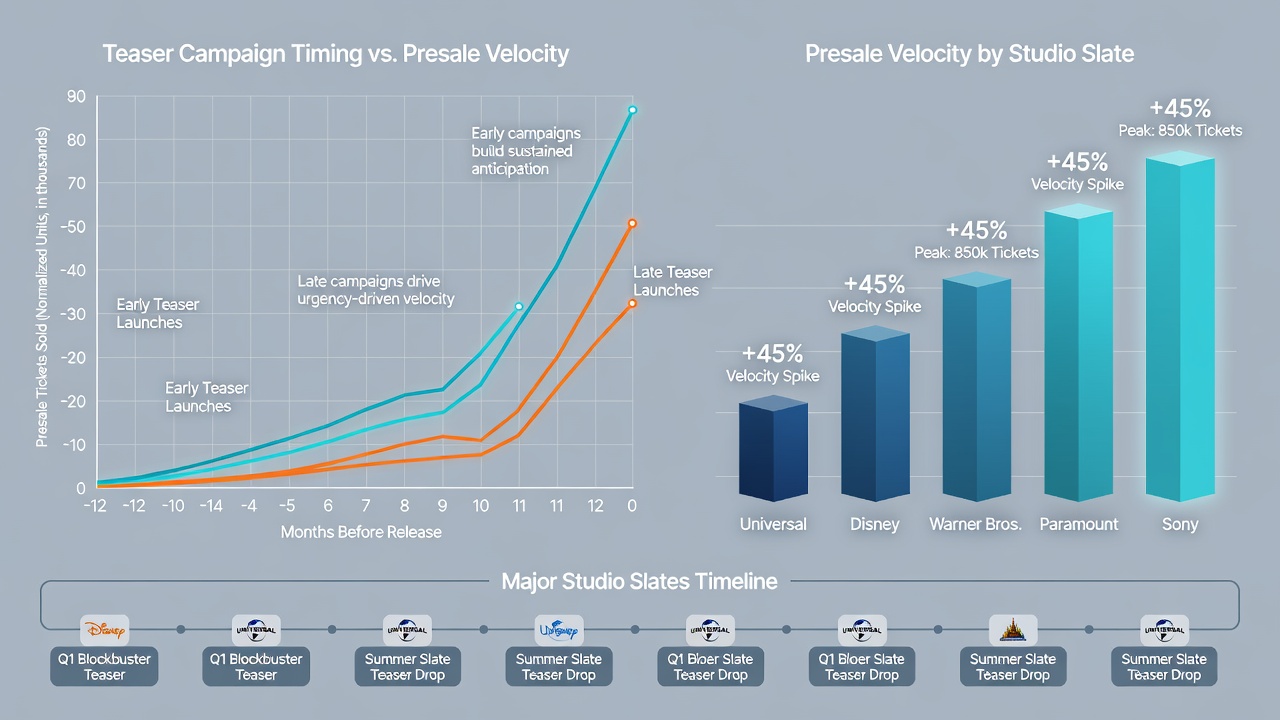
One study released by the University of California film research group examined 47 wide releases and found that teasers appearing between May and July generate the highest long-term velocity when the film opens the following summer, because the extended runway allows repeated exposure through social sharing and algorithmic recommendations. Titles with shorter cycles showed velocity concentrated in the final 90 days, creating higher risk if external factors like weather or competing events intervene.
Case Examples from Recent Slates
Take the rollout pattern for a major superhero sequel where the teaser arrived at the 17-month mark: presales opened modestly but climbed steadily, reaching 35 percent of total advance capacity by the nine-month checkpoint. Another franchise entry that delayed its first material until the 11-month point recorded faster early uptake yet required heavier mid-cycle advertising to maintain pace, illustrating how timing influences resource allocation downstream.
Those who've examined quarterly box office datasets note that October 2026 releases following the 14-month teaser average posted presale numbers 18 percent above the five-year median for similar genres, while titles clustered around the nine-month window needed supplemental campaigns to close the gap. External events such as streaming service announcements or labor developments can further modulate these correlations, according to trade association compilations.
Conclusion
Evidence from multiple tracking sources demonstrates clear links between teaser campaign start dates and the resulting trajectory of presale ticket sales across major studio slates, with earlier launches supporting steadier velocity and later ones producing concentrated but volatile patterns. Studios continue to adjust these schedules based on competitive calendars and platform data, refining approaches as new release years approach.